Concrete retaining walls in Fort Dodge IA - a slope that drains and stays put
Slope washing into the yard or an old wall starting to lean? We build a footed, drained concrete wall that holds the ground back.
What does a concrete retaining wall involve in Fort Dodge?
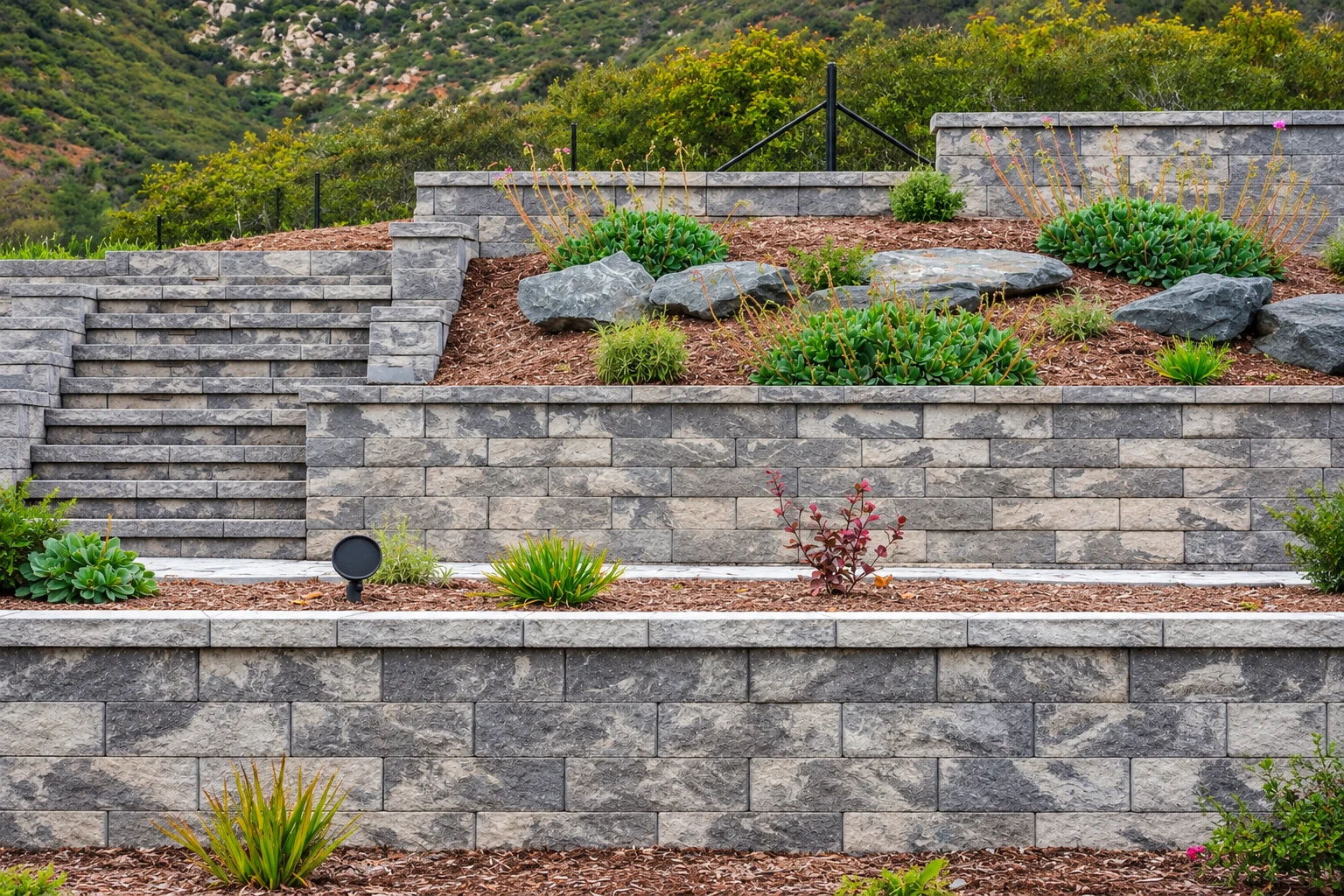
A concrete retaining wall holds back the earth on a slope so your yard stops washing downhill, and at Fort Dodge Concrete we build each one in Fort Dodge on a footing, with steel inside and drainage behind it.
Most calls start with dirt washing across a walk after a hard rain, a bank that keeps slumping into the yard, or an old wall that's started to tip. We're based in Fort Dodge and work in Webster City and the cities around it, and on every one of those jobs the price moves with the wall's height and length, how much digging and hauling the slope needs, and how much drainage goes in behind it. The schedule mostly turns on settling the design and any permit with the city, then dry weather for the pours and the curing time, which is the wait while the concrete gains strength before we put dirt back against it. I come out, look at your slope and write up the estimate myself so you can see what's included.
How we build a concrete retaining wall
I start by walking the slope with you, looking at where your water runs and, if there's an old wall, whether it's leaning, because a wall that has started to lean likely needs rebuilding and I'd rather tell you that straight than sell you a patch. Then we dig out for the footing, the wide concrete base the wall stands on, pack the ground under it and set the forms and rebar, the steel bars that help the concrete stand up to the push of the dirt. We pour the footing, then the wall, and before any dirt goes back we build the drainage in behind it with stone and perforated pipe, since water trapped behind a wall is what pushes it over, and we keep the outlets where you can reach them. Once the wall has cured, we backfill and clean up. The footing and the drain are the first things people want to trim because nobody sees them once the dirt is back, but I'd put the money there before the face of the wall, since a good-looking wall that tips is still a wall you're paying to replace.
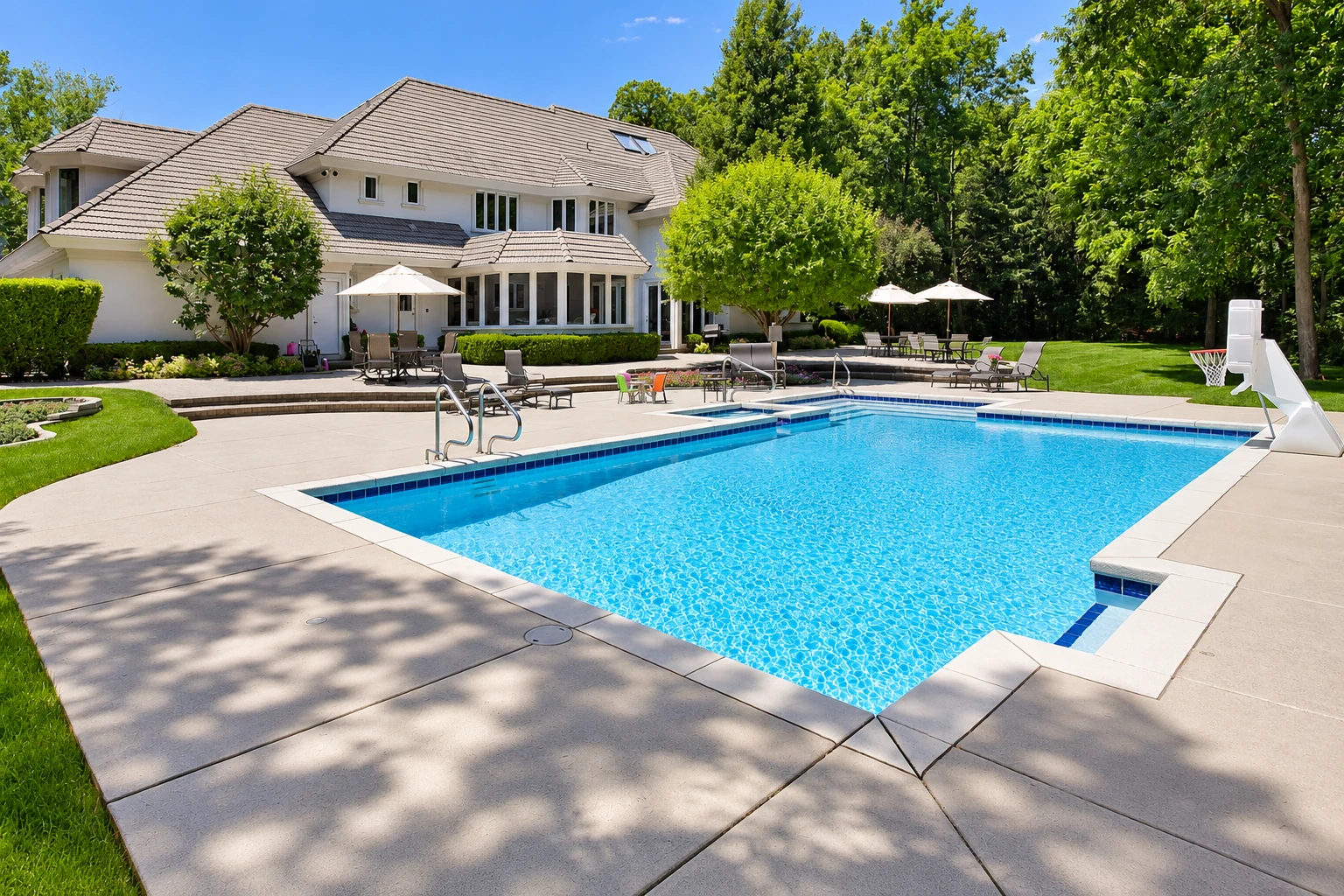
A wall usually changes the ground around it, so it's often the first piece of a bigger job. If the level ground it creates is headed for a shed, shop or garage, we can follow with concrete floor installation, and on a backyard that steps down to a pool, the wall often sets the grade for one of our concrete pool decks.
A new wall on an open slope
This suits a yard where dirt keeps washing down or a bank keeps slumping and nothing holds it back yet. We plan the footing and the drainage around your slope from the start, so the wall goes in once.
Tearing out and rebuilding an old wall
This suits a wall that's leaning, cracked or bulging, because once a wall has moved, the fix starts at the base. We take the old one out, look at whatever water got it moving, and build new with drainage behind it.
Concrete retaining walls in Fort Dodge: permits and digging
In Fort Dodge, the city oversees building work through permits, and its Inspections Department answers permit questions before a project starts. Whether your wall needs a permit isn't something I'll guess at, so before we start we work out with the city which office handles your project, and if a permit is needed we take care of the application or help you with yours. It's worth settling early, because the city doubles the permit fee when a permit isn't issued before work starts. Then, before anyone digs for the footing, Iowa law requires a call to 811, also called Iowa One Call, at least two business days ahead, and the state's utility regulators advise homeowners to confirm their contractor made that call and to let work start only once the lines are marked.
On jobs around Fort Dodge and over in Webster City, the walls we're asked about usually sit beside a driveway or hold up a backyard slope, and the trouble tends to show up where water off the roof or the drive soaks in behind them. So I walk the yard to see where your downspouts and driveway send water before we decide where the wall's drain lets out.
Concrete retaining wall work
Why call us for retaining walls
I write your estimate myself
I come out to look at the job and write the estimate myself, and I work the job with our crew. The person who answered your questions at the slope is the one watching the forms and the pour.
Licensed and insured, ask about both
We're licensed and insured. Iowa's Department of Inspections, Appeals, and Licensing requires anyone earning at least $2,000 a year from construction to register, and in Fort Dodge the city tests and issues contractor licenses, so it's fair to ask any contractor you're weighing about both.
Learned on other people's rushed jobs
Before I went out on my own in 2023, I spent years as the right hand to another concrete contractor here, setting forms, running pours and fixing jobs other people rushed. That's where I learned that the base, the forms and the timing of the pour decide how concrete holds up.
What matters most is how water gets out from behind the wall, so send us a note about your slope or call (515) 417-2702 and I'll come take a look.
(515) 417-2702Get a written estimate for your retaining wall
We reply within one business day and set a time for me to come out to your property. I'll look at the slope and write up a free estimate so you can see what's included, with no obligation to go ahead.
Questions about retaining walls in Fort Dodge
What does a retaining wall cost in Iowa?
Building a retaining wall in Iowa usually costs about $32 to $38 per square foot, and that's the going rate across the state, not our price. Where your wall lands depends on the design it needs, how hard the slope is to reach and dig, and whether an old wall has to come out first. I'll come out and write it up for your wall.
Will better drainage fix my leaning retaining wall in Fort Dodge?
Usually not. One engineering source says drainage won't fix a wall that's already leaning or cracked, because the wall itself has moved, so it likely needs rebuilding from the base. That's why a leaning wall gets a budget for new work, not a patch, when I write up your estimate.
What causes a concrete retaining wall to fail?
Poor drainage is by far the most common cause of trouble in walls that hold back earth. Water that builds up behind a wall can greatly raise the load on it and lead to leaks and freeze damage, so the drain outlets need to stay clear. When you compare bids, ask whether each includes drainage stone, filter fabric that keeps dirt out of that stone, and perforated drain outlets as designed.
How do I know what size footing my retaining wall needs?
The wall's design or the code that applies tells you, because height alone isn't enough to size a concrete retaining wall. The footing, the steel, how deep the wall sits in the ground and the assumptions about the soil all come from that design. Ask each contractor which design or code their price is based on, so you're comparing the same wall.
Can I put a driveway next to a new retaining wall?
Bring it up before the wall is designed. A driveway added near the wall later, a change to the dirt behind it, or water left to build up can undo the design, even with strong concrete. If a drive or parking spot is in your plans, tell me at the estimate so it's part of the wall from the start.
When is the footing inspected for a retaining wall in Fort Dodge?
On work under a Fort Dodge permit, the footings inspection happens before the concrete for the footings is poured. If your wall has a permit, we plan the pour date around that visit, with the trench dug and the steel set so the inspector sees it before any concrete goes in.
Plan your retaining wall and the ground around it
Call (515) 417-2702 or send the form with photos of your slope and any leaning wall, so I can plan the visit before I come.